
Why It's So Hard to Demolish the Demonic Infrastructure of Narcissism (Part 2): The Story of King Nebuchadnezzar
Dec 17, 2025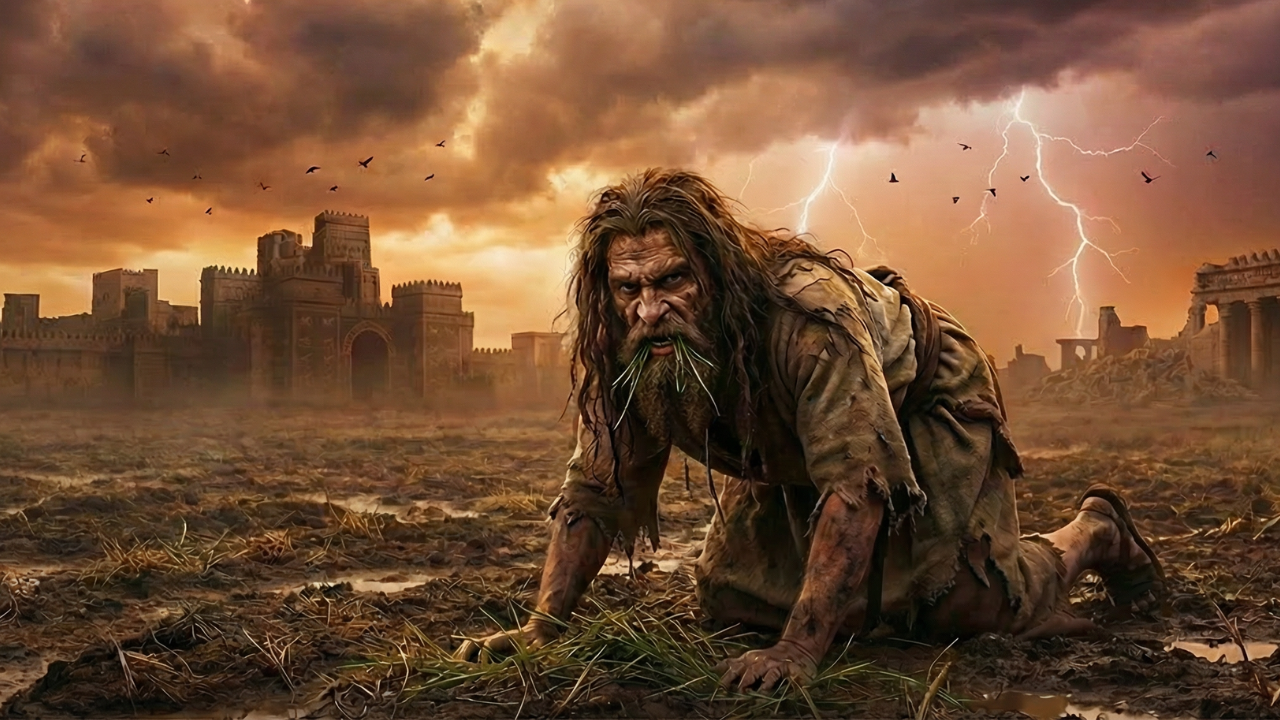
You've prayed. You've set boundaries. You've loved them through crisis after crisis. And you keep thinking, "Maybe this time. Maybe this loss will wake them up. Maybe now they'll finally see."
But nothing changes.
And you're starting to wonder: Am I doing something wrong? Is there something I'm missing? Why does nothing seem to work?
In Part 1, we looked at how the narcissistic fortress gets built—layer by layer, spirit by spirit, over decades. Today, I'm going to show you why that fortress is so resistant to change. And I'm going to do it through one of the most profound stories in Scripture: the story of King Nebuchadnezzar.
Because what happened to him reveals something devastating about narcissistic strongholds: even seven years of divine humiliation doesn't guarantee transformation.
The Setup: Who Was Nebuchadnezzar?
Let me set the stage. Nebuchadnezzar II was the most powerful king of the Babylonian Empire. He ruled from 605 to 562 BC. He was a military genius, an architectural visionary, and by all accounts, the most dominant ruler of his time.
He conquered nations. He built the Hanging Gardens of Babylon—one of the Seven Wonders of the Ancient World. He expanded his empire to unprecedented heights.
And he was deeply, deeply proud.
That pride would become his undoing.
To read the full story of Nebuchadnezzar, you can find it in Daniel Chapter 4 of your Bible. But I'm going to walk you through it here.
The Dream: God's Warning
One night, Nebuchadnezzar had a dream that terrified him. He saw a massive tree that reached to the heavens, visible to the ends of the earth. It provided food and shelter for all living creatures.
Then a messenger from heaven came down and said:
"Cut down the tree and trim off its branches. Strip off its leaves and scatter its fruit. But let the stump and its roots, bound with iron and bronze, remain in the ground. Let him be drenched with the dew of heaven, and let him live with the animals among the plants of the earth. Let his mind be changed from that of a man and let him be given the mind of an animal, till seven times pass by for him."
The dream was a prophecy. The tree was Nebuchadnezzar. And God was warning him: Your pride is going to bring you down.
Daniel interpreted the dream, and he was so distressed by what it meant that he hesitated to speak. Finally, he told Nebuchadnezzar:
"You, Your Majesty, are that tree. You will be driven away from people and will live with the wild animals. You will eat grass like the ox and be drenched with the dew of heaven. Seven times will pass by for you until you acknowledge that the Most High is sovereign over all kingdoms on earth and gives them to anyone he wishes."
But here's the key: Daniel gave him a way out.
He said, "Therefore, Your Majesty, be pleased to accept my advice: Renounce your sins by doing what is right, and your wickedness by being kind to the oppressed. It may be that then your prosperity will continue."
God gave Nebuchadnezzar a warning, an interpretation, and a path to repentance. All he had to do was humble himself, renounce his pride, and show kindness to the oppressed.
The Twelve Months: The Window of Grace
Here's what's profound: Nebuchadnezzar had twelve months to repent.
Daniel 4:29 says, "Twelve months later..."
God didn't strike him down immediately. He gave him a full year to change. A full year to humble himself. A full year to acknowledge God's sovereignty.
But Nebuchadnezzar didn't change. He didn't repent. He didn't humble himself.
Instead, he doubled down on his pride.
Twelve months after the dream, Nebuchadnezzar was walking on the roof of his royal palace in Babylon. He looked out over the city he had built—the walls, the gardens, the temples, the palaces—and he said:
"Is not this the great Babylon I have built as the royal residence, by my mighty power and for the glory of my majesty?"
This is the moment. This is the trigger.
He didn't say, "Look what God has enabled me to build." He said, "Look what I have built. By MY power. For MY glory."
He took credit for what God had given him. He worshiped the created thing—himself and his empire—rather than the Creator.
And while the words were still on his lips, judgment fell.
The Seven Years: Complete Annihilation of the False Self
Immediately, Nebuchadnezzar was driven away from people. He lost his sanity. He lived with wild animals. He ate grass like an ox. His body was drenched with dew. His hair grew like the feathers of an eagle, and his nails like the claws of a bird.
For seven years, the most powerful man on earth was reduced to an animal.
This wasn't just humiliation. This was complete annihilation of the false self.
Everything that made him "Nebuchadnezzar the Great" was stripped away:
- His power
- His palace
- His position
- His sanity
- His dignity
- His humanity
He was left with nothing but the raw, broken, vulnerable self he had spent his entire life avoiding.
Seven years. Not seven days. Not seven weeks. Seven years.
Because pride that's been entrenched for decades doesn't break quickly—even under divine discipline.
The Restoration: What Happened After Seven Years
After seven years, something shifted. Daniel 4:34 says:
"At the end of that time, I, Nebuchadnezzar, raised my eyes toward heaven, and my sanity was restored. Then I praised the Most High; I honored and glorified him who lives forever."
His sanity returned. And he made a public confession:
"His dominion is an eternal dominion; his kingdom endures from generation to generation. All the peoples of the earth are regarded as nothing. He does as he pleases with the powers of heaven and the peoples of the earth. No one can hold back his hand or say to him: 'What have you done?' Now I, Nebuchadnezzar, praise and exalt and glorify the King of heaven, because everything he does is right and all his ways are just. And those who walk in pride he is able to humble."
This sounds like genuine repentance. He acknowledged God's eternal dominion. He acknowledged God's sovereignty. He admitted his pride. He testified publicly.
So the question is: Was Nebuchadnezzar truly transformed?
The Question: Was He Truly Transformed?
Here's where it gets nuanced. And here's where the story reveals something devastating about narcissistic strongholds.
Because if you look at the evidence, it's not clear that Nebuchadnezzar was genuinely transformed.
Yes, he praised God. Yes, he acknowledged God's sovereignty. Yes, he testified publicly.
But there's no evidence of ongoing relationship with God. There's no evidence he abandoned Babylonian gods. There's no evidence he changed how he ruled.
In fact, if the timeline is correct—and scholars believe his madness occurred between 593 and 586 BC—then Nebuchadnezzar destroyed Jerusalem and God's temple shortly after his restoration.
Think about that.
He praised God's sovereignty. Then he destroyed God's temple.
He acknowledged God's power. Then he enslaved God's people.
He confessed his pride. Then he returned to ruling Babylon exactly as before.
So what happened? How can someone survive seven years of divine humiliation and still not change?
The Devastating Truth: Humbled But Not Transformed
Here's what I believe happened: Nebuchadnezzar was humbled, but he was never transformed.
The seven years broke his arrogance—his inflated view of his own greatness. But it didn't break his autonomy—his claim to rule his own life.
He learned he wasn't invincible. But he never learned he wasn't sovereign.
He bowed to the reality of God's power. But he never surrendered the throne of his heart.
The Five Revelations: What the Seven Years Actually Revealed
Let me show you what I mean. There are five profound revelations in Nebuchadnezzar's story that explain why narcissistic strongholds are so hard to demolish.
Revelation 1: Divine Discipline Can Break Pride Without Breaking the Throne
The seven years broke Nebuchadnezzar's pride. But it didn't dethrone his self-worship.
He acknowledged God's power over him. But he never surrendered his power to God.
This is the difference between being humbled and becoming humble.
Humbled means circumstances forced you to acknowledge something. Humble means your heart has genuinely surrendered.
Nebuchadnezzar was humbled. But there's no evidence he became humble.
Revelation 2: Acknowledgment of God's Power ≠ Surrender to God's Lordship
Nebuchadnezzar's confession was theologically accurate. He got the doctrine right. He knew about God's sovereignty, God's power, God's eternal dominion.
But knowing about God is not the same as knowing God.
He was like a defeated enemy acknowledging his conqueror's strength—not a beloved son embracing his Father.
He praised God's power to protect himself from future humiliation, not because his heart had been captured by God's love.
Revelation 3: The Fortress Can Reabsorb Even Divine Discipline
Here's the most profound part. The fortress didn't collapse. It reabsorbed the experience and used it to reinforce itself.
How? By reinterpreting the humiliation through the five layers we talked about in Part 1.
Layer 1 said: "I'm so special that God Himself had to intervene to deal with me. No ordinary discipline would do."
Layer 2 said: "I've learned how to avoid this. I can manage God by acknowledging His power."
Layer 3 said: "I can use this story to look humble and spiritually mature."
Layer 4 said: "I confessed. I acknowledged God. What more does He want from me?"
Layer 5 said: "God gave my kingdom back to me. The throne is still mine. I'm still in charge."
The fortress took the very thing that should have destroyed it and turned it into evidence of its own resilience.
Revelation 4: Religious Experience Without Heart Transformation = Spiritual Inoculation
Nebuchadnezzar's confession became a shield against true surrender.
"I've already dealt with God. I've already been humbled. I've already acknowledged His sovereignty. What more do you want?"
His "God moment" wasn't the beginning of transformation—it was the end of his openness to it.
He could now point to his confession as proof that he had "handled" the God issue, without actually surrendering his life to God.
Revelation 5: You Can Bow to God's Power and Still Refuse to Surrender Your Throne
This is the heart of it. Nebuchadnezzar's confession was damage control, not heart transformation.
The proof? He got off his knees, returned to his throne, and continued ruling his kingdom—just with a new story about how powerful God is.
He acknowledged God's power over him. But he never surrendered his power to God.
What This Means for You
So here's the devastating truth that Nebuchadnezzar's story reveals:
You can survive seven years of eating grass and still refuse to get off the throne.
The seven years broke his pride. But it didn't break his autonomy.
It shattered his arrogance. But it didn't dethrone his self-worship.
It produced acknowledgment. But not transformation.
Confession. But not conversion.
Religious experience. But not heart surrender.
And this is what you're up against when you're in relationship with a narcissist. Even the most extreme consequences—losing their family, their reputation, their ministry, their health—can be reabsorbed by the fortress and reinterpreted in a way that reinforces it.
Humiliation does not equal humility.
Rock bottom does not guarantee repentance.
And your love, no matter how Spirit-led, cannot force someone off the throne of their own heart.
Your Freedom Begins Here
If you're in relationship with someone like this, I want you to hear this clearly:
You did not build this fortress. And you cannot tear it down. Only God can.
Your role?
- Speak truth when led
- Set boundaries without guilt
- Pray—but release the outcome to God
- And above all: do not let their prison become yours
You are not responsible for their repentance. You are responsible for your peace.
You are not failing because they're not changing. You're encountering a spiritual stronghold that's been decades in the making—and that can reabsorb even divine discipline.
Stop blaming yourself. Stop thinking if you just loved them better, prayed harder, or set clearer boundaries, they'd finally see.
They can't see. Not because you're doing it wrong. But because the fortress is doing its job.
Their fortress is not your destiny.
Get Your Free Visual Guide
If you haven't grabbed it yet, make sure you download The 5-Layer Fortress: A Visual Guide to Understanding Narcissistic Strongholds.
It's completely free. It breaks down:
- Each layer of the fortress in detail
- The spirits operating at each level
- Scripture references for spiritual warfare
- Prayer points for each layer
- Boundary recommendations based on which layer is most active
This isn't just information—it's a tool you can reference again and again as you navigate the spiritual battle you're facing. Many people print it out and keep it as a reminder that they're not crazy, they're dealing with a real spiritual fortress.
Download Your Free Visual Guide Here
You Are Not Alone
You are loved. You are seen. And you are not alone.
The story of Nebuchadnezzar reminds us that even divine intervention doesn't guarantee transformation when someone refuses to surrender the throne of their heart. But it also reminds us that God sees, God knows, and God is sovereign over even the most entrenched strongholds.
Your job is not to tear down the fortress. Your job is to walk in freedom, set healthy boundaries, and trust God with the outcome.
Click here to watch the video version of this blog.
Click here to watch the video of Part 1 of this blog.
Related Resources
- Understanding the 5-Layer Demonic Fortress of Narcissism: How a Fortress is Built Over Time [Watch] [Read]
- The Spirit of Antichrist in Your Home: Recognizing Narcissistic Abuse as Spiritual Warfare [Watch] [Read]
- The Truth About Spiritual Attack in Toxic Relationships [Read] [Watch]
- How Narcissistic Abuse Undermines Your Spiritual Discernment [Read] [Watch]
- Covert Curses: How Narcissists Use Words as Spiritual Weapons (And You Don't Even Realize It)[Read] [Watch]
- The Narcissist and the Holy Spirit: Why Spiritual Transformation is So Rare [Read] [Watch]
- The Collapse of a Narcissist: What Happens When a Narcissist Hits Rock Bottom? [Read] [Watch]
- Why God Didn't Change Your Narcissist (and What He's Really Doing) [Read] [Watch]
Find more resources in our topic-based catalog
Downloadable Resources
- The Believer's Guide to Identifying Flying Monkeys
- 7-Day Email Journey to Survive a Narcissistic System
- 7-Day Email Series: Journey to Freedom From the Pain of Injustice
- 100 Biblical Declarations to Strengthen Your Identity in Christ
- Checklist: Signs of Spiritual Abuse or Cultish Environments
- Checklist: 20 Signs that You Might Be Experiencing Narcissistic Abuse
- Guide: How to Pray for a Narcissist
- Prayer: Healing from Gaslighting
- E-book: 7 Steps to Spot a Narcissist
Want more content like this?
Get encouraging and empowering content delivered straight to your inbox! Join my mailing list to receive weekly blogs and resources.
By filling this form, you agree to receive quality-filled communications from us. We will never spam you or share your information with a third party.